
Sept. 21-24 • Bangkok, Thailand
Shrimp Welfare
Humane Slaughter and Eyestalk Ablation
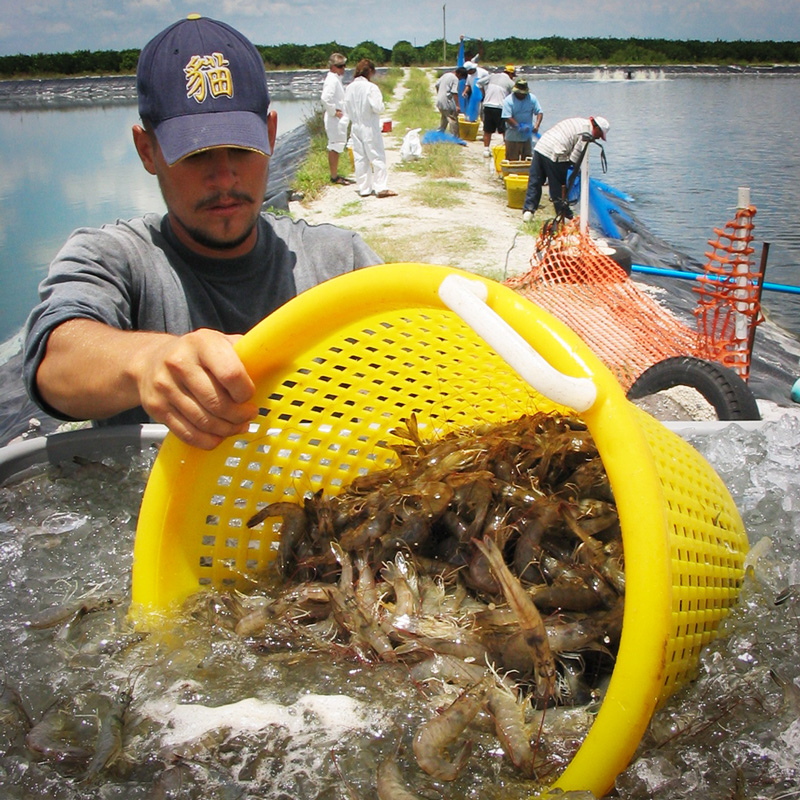
Consumers and seafood buyers are increasingly insisting on higher standards for animal welfare throughout seafood production. This session will investigate the principal welfare concerns in shrimp farming, which include humane slaughter at harvest, eliminating the need for eyestalk ablation in broodstock, and maintaining good welfare throughout the growout cycle. The latest research into humane slaughter methods—which include electrical stunning followed by chill killing, as well as direct chill-killing—will be reviewed, including the insights into the effectiveness of these methods revealed by physiological and behavioral indicators. Speakers will discuss how successive generations of domestication, genetic improvement, and advances in broodstock maturation techniques are making eyestalk ablation—long used to hormonally stimulate egg production in captive penaeid shrimp—increasingly unnecessary. Welfare during growout is also receiving greater attention, not only as an ethical responsibility but as an important contributor to improved health, resilience, and production performance.
University of Stirling

Shrimp Welfare Project

Devi Seafoods

Ace Aquatec


University of Stirling
University of Stirling
University of Stirling
Devi Seafood
University of Stirling
University of Stirling
Simão Zacarias is a Researcher at University of Stirling, visiting Researcher at Asian Institute of Technology and The Center for Responsible Seafood supporting staff. He has been working on viable alternative paths to shrimp eyestalk ablation. He also work on “ Improving Farmed Fish Welfare in Asia” project in which the focus is on developing new interventions that will have positive fish (including shrimp) welfare outcomes in Thailand and Vietnam and provide education on aquatic farmed animal welfare. He was the 2020 Global Aquaculture Innovation Award Winner which recognized his innovative research on advantages of stopping using shrimp eyestalk ablation.
Sarabpreet has been associated with the seafood industry for over 20 years in various capacities. As General Manager at Devi Seafoods he been working on strategies to achieve the company’s sustainability goals. As part of eco certification and sustainability initiatives of shrimp farms, he has engaged with different stake holders of the industry. Devi Seafoods having integrated infrastructure and presence across the entire shrimp supply chain has given him opportunity to implement international sustainability standards in shrimp hatchery, farms, feed mill and processing facilities.
Ravi Kumar Yellanki is the Managing Director of Vaisakhi Bio-Marine Private Limited and Vaisakhi Bio-Resources Private Limited, one of the leading shrimp hatchery operators in India and operates one of the largest farms in the country. The company is also making its foray in to shrimp exports.
For more than 20 years, Mr. Ravi Kumar Yellanki has been familiar with hatchery operations in India. Remarkably through his numerous written papers and publications, he shared his experiences and knowledge concerning shrimp hatchery sphere such as the management and its role in changing environment. His expertise in terms of local market trends and opportunities is unquestionable.
Today, he concentrates his awareness on building sustainable strategies for Indian Shrimp Aquaculture. He also happens to be the President of All India Shrimp Hatchery Association (AISHA) and immediate past president of Society of Aquaculture Professionals (SAP).
Amaya Albalat, originally from Spain, moved to Scotland in 2005 after completing a PhD in fish physiology. Once in Scotland she started her work with decapod crustaceans both as a postdoctoral researcher at the University of Glasgow and as an established academic at the Institute of Aquaculture, University of Stirling. Her research is focused on understanding how commercial fishing and aquaculture practices impact the physiology of decapod species from a welfare perspective.
Some of Albalat’s current work includes assessing the impact of different stunning methods at the time of killing. She approaches this question by assessing behavioral, neurological, and physiological responses in laboratory and farm settings. Her work also includes the impact that animal welfare might have on product quality and from an innovation perspective she is exploring different technologies for shelf-life extension in decapod crustaceans.