Health Management in Shrimp Aquaculture
Reframing the Challenge
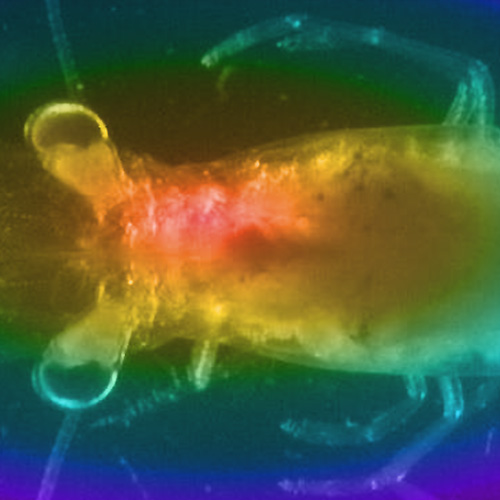
Major advances in health management have begun to transform how the shrimp industry approaches disease prevention and control. This session will explore the evolution from pathogen-focused strategies toward comprehensive health management systems that combine disease exclusion through Specific Pathogen Free (SPF) stocks with improved tolerance through Specific Pathogen Tolerant (SPT) approaches. Emerging tools such as epigenetic conditioning, rapid field diagnostics, bacteriophage applications, and next-generation vaccines offer additional opportunities to strengthen shrimp health. The session will also review how production practices—including site selection, facility design, water exchange, carrying capacity, and stress management—are increasingly recognized as disease risk factors. The role of regulatory frameworks will also be explored.
CP Foods

One Health
Kytos
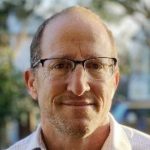
Deakin University
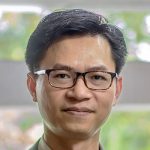
Asian Inst. of Technology
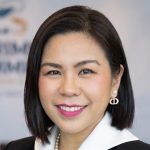
BIOTEC

Corporación Lanec
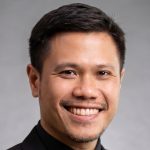
BIOTEC

Genesis Biotechnology
So. FL Farming Corp.
BIOTEC
Victoria Alday-Sanz is a veterinarian with an M.Sc. and Ph.D. from Stirling University (UK). She has worked for over 35 years on diverse aspects of shrimp and fish biosecurity covering research on pathogens and diseases, diagnostics, sanitary legislation, health management, development of SPF stocks and syndromic surveillance. She has collaborated as an expert for international organizations such as FAO, WOAH, EU, EFSA and WB as well as with the private sector.
Alday-Sanz has lived and work in Southeast Asia, Middle East and Latin America and published over 35 papers in peer review journals, over 50 articles in industry magazines, 5 book chapters, is co-author of the CD-rom Diagnosis of Shrimp Diseases and editor of The Shrimp Book I and II. She was director for Aquaculture Biosecurity for Pescanova where she led the development of a population of “reverse SPF” shrimp (Specific Pathogen Free and Specific Pathogen Tolerant stocks).
Presently, she is the Director for Biosecurity, Breeding programs and Research and Development for the National Aquaculture Group of Saudi Arabia.
Robins McIntosh has been involved in shrimp aquaculture for over 30 years. He was responsible for developing the first zero-water exchange, intensive and revolutionary shrimp farm in Belize. His initial work in shrimp aquaculture was with Weyerhaeuser in Florida and Brazil. Later, after four years developing and managing the algae-to-fuel program for the U.S. DOE, he returned to Asia, where he was involved in the development and management of Thai Hawaiian Hatcheries in Thailand.
Robins is currently employed as Executive Vice President for technical development of shrimp culture within the Charoen Pokphand Group. He joined the Group in 2001 to assist with the restructuring of shrimp culture in Thailand and Southeast Asia. Under his direction, hatcheries were modernized, genetic programs were initiated, and farm management was made more systematic and biosecure. Robins continues to work on increasing the efficiency of shrimp culture and finding solutions to eradicate EMS/APHND and EHP diseases in shrimp. He is today also CEO of Home Grown Shrimp, a US subsidiary of CPF focussed on producing shrimp in indoor facilities in the USA.
Acacia Alcivar-Warren earned her doctorate in veterinary medicine at Universidad de Guayaquil, Ecuador. She was a Fulbright Scholar with MSc and PhD degrees from Iowa State University, and held postdoctoral positions in the biology department at Tufts University and the Roche Institute of Molecular Biology. In 1992, as an assistant professor at the Tufts University School of Veterinary Medicine, she joined the U.S. Marine Shrimp Farming Program (USMSFP) to develop genetic markers and sequence the genome of the first SPF Penaeus vannamei (Kona Line).
In 2009, Alcivara-Warren started Environmental Genomics Inc. In collaboration with Dr. Weidong Bao of the Genetics Information Research Institute she discovered 480 transposable elements and the endogenous virus, Nimav-1_LVa, in the SPF P. vannamei genome. She focuses on epigenetic mechanisms—DNA methylation, histone modifications, and non-coding RNAs associated with growth, heat stress, pollutants, diseases—in order to understand complex traits inheritance to enhance sustainability and help the shrimp aquaculture industry worldwide.
Ruben Props is co-founder and CEO of KYTOS group, a start-up and spin-off company hailing from Ghent University, Belgium. He holds a PhD in applied biological sciences from Ghent University where he developed new methodologies for the rapid characterization of microbiomes in natural and engineered aquatic environments. He received a grant from the Belgian American Educational Foundation (Sofina-Gustave Boël fellowship) to pursue PhD research at the University of Michigan (2016-2018) and was granted an FWO postdoctoral fellowship at Ghent University in 2018 to further develop technologies for aquatic microbial research.
Props is widely considered an expert in single-cell analysis technologies and is co-author of 40 A1 peer-reviewed articles on the topic. In 2021, he co-founded the spin-off KYTOS to make these research developments applicable to the aquaculture industry as a “full-service” platform. KYTOS is pioneering the frontier of microbiome management to empower sustainable and thriving food production through Integrated Microbiome Management (IMM) solutions. Today, KYTOS has local teams and operations in three countries, is servicing customers in more than 20 countries, and has processed more than 100,000 samples.
Ha Thanh Dong is an aquaculture pathologist based at the Asian Institute of Technology in Thailand. He has been actively working with infectious diseases in tropical aquaculture, including diagnostics, host-pathogen interactions, and vaccine development. He has played a key role in identifying and developing diagnostic methods for numerous infectious pathogens affecting fishes and crustaceans in Asia. Dong’s research extends to nanobubble technology. Recent studies from his research group have revealed novel application of ozone nanobubbles in enhancing animal immunity and oxygen nanobubbles as a muco-adhesive delivery system to deliver vaccine and/or immunostimulants. Research findings from his group have been disseminated in over 130 international publications.
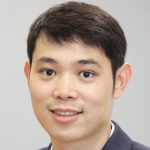
Dr. Wanilada Rungrassamee is a Principal Researcher at the National Center for Genetic Engineering and Biotechnology (BIOTEC), Thailand, where she has worked since completing her Ph.D. in Microbiology at the University of Massachusetts, Amherst, USA. Her research integrates multi-omics platforms — microbiome, transcriptome, and metabolome — to elucidate host–gut microbial interactions in shrimp, and translates that mechanistic understanding into precision feed development. She received the 2024 Excellent Research Award from the National Research Council of Thailand and was selected among 30 high-impact ASEAN researchers for the ASEAN BCG Programme. She serves on the editorial boards of Aquaculture and Microbiology Spectrum.
Sage Chaiyapechara is a senior researcher at BIOTEC, NSTDA, Thailand, holding a Ph.D. from the University of Washington and co-recipient of Thailand’s 2024 National Research Award for his team’s work on shrimp gut microbiota. Aligning upstream science with direct industry support, his research focuses on three strategic areas: host–microbiome immune interactions, environmental microbial management, and mechanism-driven feed additives and probiotics. By translating molecular discoveries into practical solutions, Dr. Chaiyapechara works to reduce chemical dependencies, mitigate disease risks, and advance sustainable, resilient aquaculture production.
Daniel Gruenberg is Chief Commercial Officer of Genesis Biotechnology Sdn Bhd, which commercializes bacteriophage solutions for aquaculture and animal health across the globe. Trained in microbiology, immunology, aquaculture engineering, and physics, he brings 25 years of experience in farm management, water treatment and aquaculture engineering across Asia and Europe. Since launching Genesis’s Thailand operations in January 2026, he has led phage adoption across seven provinces and is developing Vibrio management programs for vannamei hatcheries and grow-out with partners in Indonesia, Vietnam, and Saudi Arabia. He is based in Bangkok.
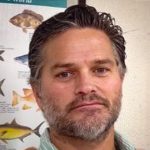
Pablo Intriago holds a Ph.D. in Microbiology and Biochemistry from the University College of North Wales and has more than 35 years of experience in aquaculture. He worked in Ecuador from 1990 to 2023 and has collaborated on projects in Colombia, Venezuela, Panama, Honduras, Guatemala and Mexico. His work covers shrimp and tilapia, including hatchery, nursery and grow-out, as well as feed manufacturing, nutrition, farm management and disease. Since 2012 he has been principal of South Florida Farming Corp., a company that manufactures and markets natural products as alternatives for farmed animals. The company operates an R&D laboratory that publishes on topics of practical relevance to the industry.
Natapong Jupatanakul is a Senior Researcher at the National Center for Genetic Engineering and Biotechnology (BIOTEC), Thailand, specializing in arthropod molecular biology and immunology across crustaceans and insects. He works to uncovers the molecular mechanisms behind important biological traits and develops tools that make genetic improvement faster, more precise, and more scalable. His aquaculture research applies genome editing and functional genomics to economically important shrimp including Penaeus monodon, and Macrobrachium rosenbergii, targeting disease resistance, growth, and sex control. He works actively with national and international partners to translate biotechnology into solutions for sustainable aquaculture, disease management, and public health.