
Can biofloc—converting waste into protein—play a key role?
As the demand for shrimp—the world’s most popular seafood—continues to grow, production methods are evolving to keep pace. Shrimp farms have advanced from traditional, extensive, and semi-intensive systems to more productive intensive and super-intensive systems. To reduce the negative impacts of these systems, however, farming practices must also evolve—ultimately to regenerative production systems that negate carbon emissions, restore ecosystems, and fortify local communities. Only then can shrimp farming achieve social acceptance while expanding to meet growing demand.
One promising solution involves intensive biofloc growout ponds. These ponds offer a pathway to regenerative systems based on their ability to absorb toxic ammonia, reduce the need for water exchange, enhance biosecurity, generate nutritious microbial biomass with growth-promoting properties, and reduce the protein requirement of feeds. However, biofloc ponds come with steep challenges: high energy costs for continuous vigorous aeration, complex protocols for managing water quality and biofloc density, and the risk of catastrophic loss in the event of equipment failure or mismanagement.
Intensive shrimp pond design: A brief history
While shrimp farming has witnessed many advances over the last 25 years in breeding, disease diagnostics, larval rearing, feeds, and processing, the basic design of intensive ponds has changed little since they were first developed in Taiwan during the 1970s. Intensive ponds are typically small, flat-bottomed rectangular basins with water inlets and outlets at opposite ends and paddlewheel aerators positioned to create circular currents. Recent additions such as plastic liners, automatic feeders, and central drain sumps have improved performance, but fundamental changes are needed to increase the efficiency of feed, water, and energy resources and to minimize disease incidence and upcycle wastes.
Management of intensive shrimp ponds
Feeds and wastes
As with animal feeds in general, only 20-30% of the nutrients in shrimp feeds is assimilated as shrimp flesh. The other 70-80% becomes waste, which impacts shrimp production. Conventional management practices are geared toward flushing these solid and dissolved wastes out of the pond. Solid wastes are bits of uneaten feed, feces, and other particulate organic matter that absorb oxygen as they decompose. As they settle to the bottom and become smothered with other sediments, they become anaerobic, producing toxic hydrogen sulfide and nitrite. Sludge is also a repository for pathogens such as AHPND and EHP.
To reduce the negative effects of solid waste, horizontal currents from paddlewheel aerators and other circulation devices are used to sweep solids toward a center drain for discharge. As radial currents approach the center of the pond, their horizontal velocity decreases, causing solids to begin dropping out of suspension before reaching the center drain. Some ponds are equipped with siphons to remove solids that accumulate around the center of the pond, but manual siphons are inefficient and time consuming, given the depth, poor visibility, large area, and cleaning requirements. Mechanical cleaning devices are not yet market-ready.
A more popular solution for solids removal is a conical central sump (“shrimp toilet”) which uses a steep slope beginning at the point of sedimentation to carry particles the final distance to the drain. Most central sumps are empirically designed and are only partially effective, due to insufficient size and depth.
Shrimp excrete ammonia as a byproduct of protein digestion. In intensive systems, ammonia and its oxidized derivative, nitrite, can accumulate to toxic levels. Toxic concentrations can be reduced by flushing the pond with new water which is low in ammonia and nitrite. Replacing water entails significant costs for pumping, filtration, and in some cases, disinfection. Filtration to remove shrimp predators and competitors also causes mortality of native aquatic organisms through impingement on screens and entrainment in pumps. The receiving water body is also degraded by the eutrophication burden of pond effluent. Ultimately, solutions are needed to eliminate the need for water exchange. A wide variety of intensive ponds with recycling water systems have been attempted, but design criteria and operating performance have been poorly understood.
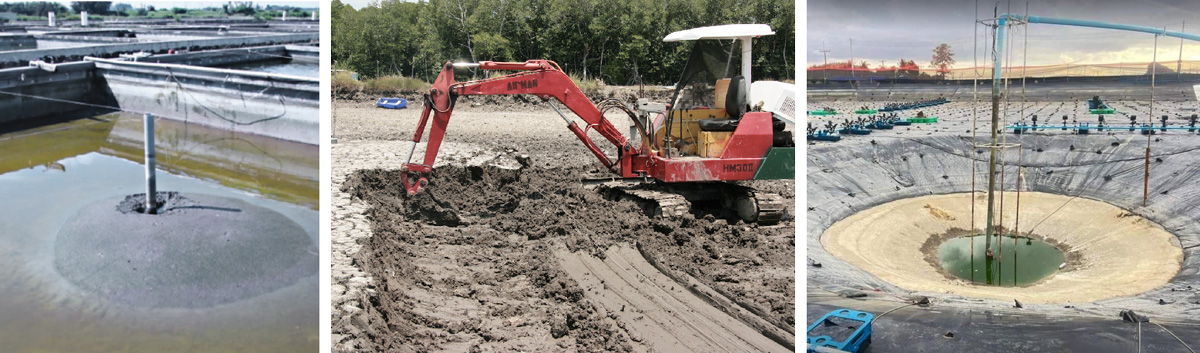
In ponds with circular water flow, solids often deposit near the center without going out the drain (left). In earthen ponds, this can require excavating the deposits between cycles (center). Shrimp toilets, if designed properly, can help transport solids to the center drain (right). (Pat et al., 2022, Aquaculture Engineering).
Dissolved waste
Shrimp excrete ammonia as a byproduct of protein digestion. In intensive systems, ammonia and its oxidized derivative, nitrite, can accumulate to toxic levels. Toxic concentrations can be reduced by flushing the pond with new water which is low in ammonia and nitrite. Replacing water entails significant costs for pumping, filtration, and in some cases, disinfection. Filtration to remove shrimp predators and competitors also causes mortality of native aquatic organisms through impingement on screens and entrainment in pumps. The receiving water body is also degraded by the eutrophication burden of pond effluent. Ultimately, solutions are needed to eliminate the need for water exchange. A wide variety of intensive ponds with recycling water systems have been attempted, but design criteria and operating performance have been poorly understood.
PART II
The promise of biofloc systems
Biofloc is a collection of suspended, snow-like particles made up of organic detritus, bacteria, algae, fungi, protozoans, and other microbial organisms that form naturally when intensive aquaculture ponds are heavily aerated with limited water exchange. Aerator currents suspend organic matter within the pond. Bacteria colonize the particles and release a sticky extracellular polysaccharide matrix that binds other suspended particles to form biofloc aggregates. The diverse bacteria present in aquaculture biofloc ponds are ubiquitous, hardy, and resilient to a wide range of environmental parameters. Similar bioflocs are also present in municipal, agricultural, and industrial treatment systems around the world.
Brief history
The evolution of biofloc systems in aquaculture occurred concurrently in diverse systems during the 1970s. To name just a few, Steven Serfling and Dominic Mendola of Solar Aquafarms utilized biofloc systems for commercial tilapia production in California. Gerard Cuzon and coworkers at the Ifremer-COP (Institut français de recherche pour l’exploitation de la mer, Centre Océanologique du Pacifique) research facility in Tahiti utilized bioflocs for intensive shrimp production. Harvey Persyn and co-workers developed biofloc tank systems at Ralston Purina’s shrimp research facility in Florida. It was not until the late 1980s that the mechanism of action of bioflocs became more widely known and understood.
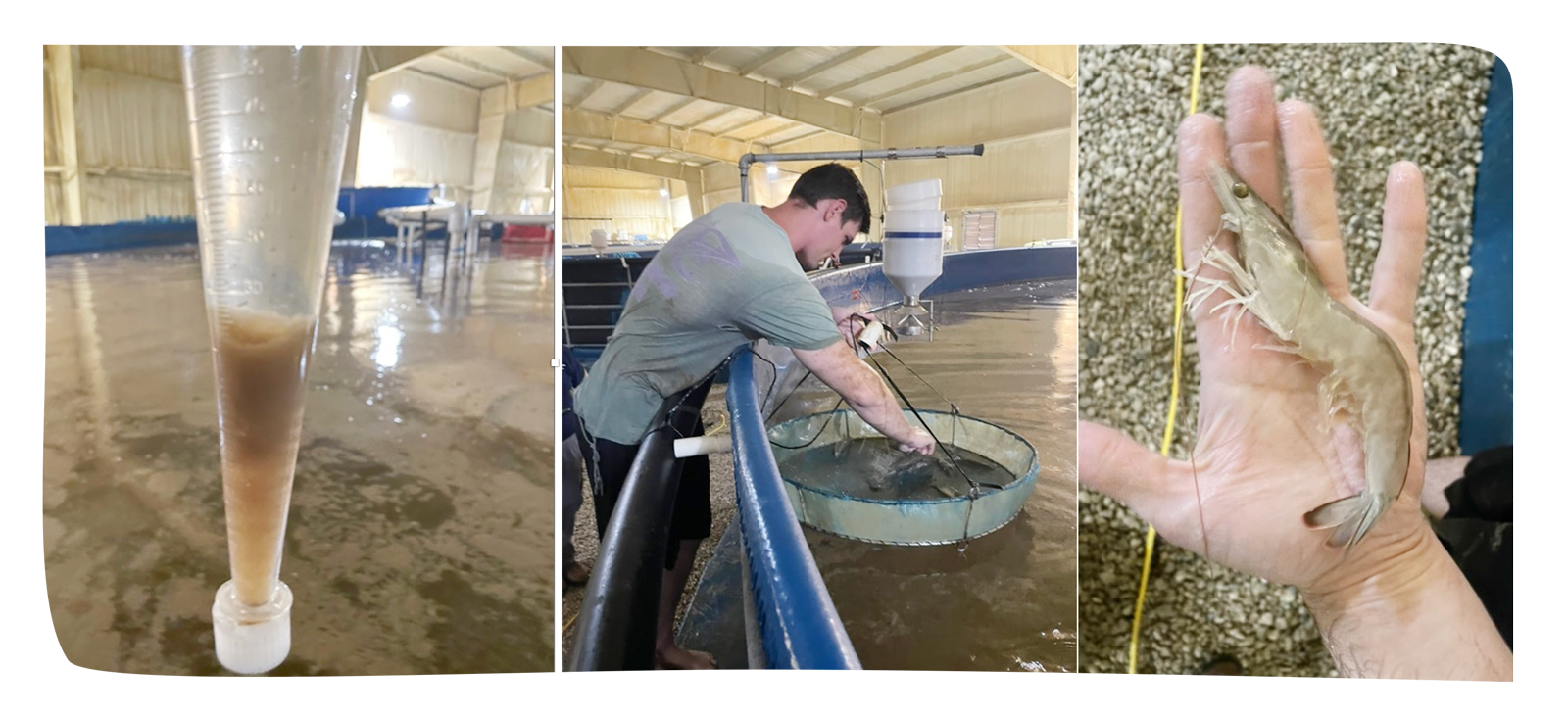
A biofloc system at HomeGrown Shrimp in Florida.
The science of biofloc
Bacterial communities in bioflocs are typically dominated by fast growing heterotrophic bacteria which rely on organic matter as their primary source of energy. They metabolize particulate organic carbon (such as feces or uneaten feed) and dissolved inorganic nitrogen (such as ammonia) to grow bacterial biomass. This transformation is remarkable considering that animal feed is normally eaten once and then wastes are discarded; in this case, wastes are converted into bacterial protein, which can be directly consumed a second time.
A fundamental characteristic of heterotrophic bacteria in biofloc systems is their improved performance in the presence of substrates with a balanced carbon to nitrogen (C:N) ratio. Researchers have demonstrated that substrates with excess carbon could be balanced by addition of inorganic nitrogen and substrates with excess nitrogen could be balanced by addition of organic carbon.1
Avnimelech et al. (1992) demonstrated that growth-inhibiting ammonia in super-intensive tilapia ponds with limited water exchange could be eliminated by adding organic carbon to balance the C:N ratio and stimulate bacterial growth. They found that supplemental organic carbon (wheat flour) could be added directly to the water or added indirectly to the feed to dilute the protein level from 30% to 20%. In both cases, bacteria within the pond utilized supplemental carbon to metabolize the excess ammonia for growth. Tilapia then consumed the microbial biomass, which spared their dietary protein requirements.
Concurrently, Hopkins et al. (1994) reported similar benefits of low-protein feed with Litopenaeus vannamei stocked at varying densities in ponds with zero water exchange and variable aeration rates. Production rates in all treatments were comparable, with no difference produced by different feed protein levels.
Contribution to shrimp nutrition
The ability to filter and consume biofloc aggregates varies among species. L. vannamei is more efficient than P. monodon or F. brasiliensis, but not as efficient as tilapia. Consumption efficiency also depends on the concentration and size of aggregates.
Growth-promoting effects
In natural food webs, detritus is an important food source in penaeid stomachs followed by copepod and animal remains (Bombeo-Tuburan et al., 1993). Aside from its value as a source of macronutrients such as amino acids, lipids, and carbohydrates, detritus from intensive shrimp ponds also has a strong growth-enhancing effect. This effect was first reported by Leber and Pruder (1988). They compared growth of shrimp in clear seawater pumped from a seawater well versus growth in the same water after it had passed through an intensive shrimp round. Effluent from the intensive pond resulted in an 89% growth improvement as compared to the clear well water.
Glencross et al. (2013; 2014) demonstrated in multiple trials that a commercially produced microbial-biomass product (Novacq™, CSIRO, Dutton Park, QLD, Australia) exhibited strong growth-promoting effects in shrimp. This patented product was also found to be effective as a replacement for fishmeal and fish oil.
Commercial biofloc systems
During the mid 1990’s, the potential of achieving high production and low FCR using low protein feed and minimal water exchange looked promising. The concept involved production of microbial biomass from nutrients that would otherwise be lost during water exchange. The microbial biomass would be consumed in situ, without associated costs of separating, drying, and processing.
Belize Aquaculture Ltd.
In 1999, Belize Aquaculture Ltd., built a pioneering, state-of-the-art shrimp farm using biofloc technology to produce high yields (~15 mt/ha/cycle) of L. vannamei in highly aerated, plastic-lined ponds with low protein feeds and zero water exchange (McIntosh, 2000, 2001). The results greatly advanced the prospect of intensive shrimp production in biofloc ponds, but they also illuminated a number of challenges and complexities. The high density of biofloc required continuous vigorous aeration, meticulous management of water and sediment quality, and vigilance to prevent catastrophic losses in the event of aeration failure. High levels of suspended solids concentrated in a hypoxic zone at the center of the pond, which caused stress and chronic mortality.
Broodstock growout and nursery systems
While high biofloc densities are challenging to manage for commercial growout, lower-density systems have proven useful for broodstock growout and nursery systems. These enable reduced reliance on water exchange, improved biosecurity, enhanced nutrition and egg production, and use of raceway configurations with greenhouse covers to facilitate temperature control.
PART III
Overcoming the constraints of biofloc systems
Energy cost and risk
Conventional biofloc systems with zero water exchange require double the energy of intensive ponds with water exchange to maintain dissolved oxygen levels and to continuously keep flocs in suspension. Catastrophic losses can occur quickly in the event of aerator or power failure. Backup systems and alarms are critical.
Biofloc stability
Maintaining a stable density and composition of biofloc is challenging because the community of microorganisms responds rapidly to changes in nutrients, density, and environmental conditions. Insufficient biofloc leads to toxic ammonia levels, risk of pathogenic vibrios, and a shift from heterotrophic to autotrophic communities dominated by phytoplankton. Excessive biofloc causes irritation of shrimp gills, deteriorating water quality, and mortality.
Semi-biofloc systems
To reduce the challenge of managing high biofloc densities, some intensive shrimp farms greatly reduce organic carbon additions to reduce the density of heterotrophic bacteria and enable higher densities of slow-growing nitrifying bacteria. They also continuously crop solids to improve water quality. These systems are referred to as “semi-biofloc”.
Semi biofloc systems are widespread in China, Vietnam, Indonesia, Peru, Guatemala, and Belize. Intensive ponds or tanks continuously crop biofloc solids using a central drain or sump. Some central sumps are equipped with pumps controlled by a timer. Wastewater and solids from sumps can be drained or pumped over a screen to easily view and evaluate the quantity of shrimp exoskeletons, dead shrimp, and waste feed. Generally, the wastewater is temporarily held in a sedimentation basin and then released to public waters, but some farms utilize large sedimentation and aeration ponds to condition and recycle water.
Improving biofloc technology
Semi-biofloc management reduces the challenge of managing high biofloc density but fails to capitalize on the full potential of heterotrophic bacteria with balanced C:N substrates. Also, most semi-biofloc ponds continue to discharge rich effluent into receiving waterways.
To take full advantage of the benefits of biofloc systems, they must be redesigned to optimize hydraulics, aeration, circulation, and management. Traditionally, shrimp farmers have relied on empirical testing of modified pond designs to develop improvements, but it would be expensive and unwieldy to build and test all the variations of pond size, depth, bottom slope, current speed, central sump dimensions, etc. to find combinations that create an optimal environment for shrimp and for managing biofloc solids. Computational fluid dynamics (CFD) modeling, on the other hand, can be used to evaluate a wide range of design options to identify the most promising scenarios to select and test.
Computational fluid dynamics modeling
As a proof of concept, TCRS engaged Dr. Brian Vinci of the Freshwater Institute, West Virginia to evaluate CFD scenarios for improving performance of indoor round tanks at HomeGrown Shrimp in Indiantown, Florida. Vinci reviewed the literature to establish suitable ranges for baseline criteria and used the following parameters to create 17 scenarios:
- Circulation
- Inlet type
- Center drain flow
- Tank diameter
- Pumped flow
- Equivalent hydraulic retention time
- Inlet jet
- Velocity
Once the optimal scenario was determined, the existing circulation system in one round tank was modified by removing airlifts and installing pumped flow with nanobubbles and pure oxygen. A second pump was installed to direct solids from the center drain to a radial flow settler to continuously remove settleable biofloc.
PART IV
Solutions
Bottom cleaning
To achieve the benefits of regenerative systems, shrimp ponds must be redesigned to optimize hydraulics, aeration, circulation, and management. Traditionally, shrimp farmers have relied on trial-and-error evaluation of pond designs, because it is prohibitively expensive to build and test all the variations of pond size, depth, bottom slope, current speed, central sump dimensions, etc., to find combinations that create an optimal environment for shrimp and for managing biofloc solids.
A more systematic and economical approach is the use of computational fluid dynamics (CFD) modeling to develop and evaluate a wide range of design options. This identifies the most promising scenarios, which can then be tested with production trials (Vinci et al, 2026). Intensive shrimp ponds vary widely. Different approaches are needed for different shrimp farming scenarios, ranging from retrofitting existing ponds to capture partial biofloc benefits to designing purpose-built systems for more optimal performance.
Waste recycling
Ultimately, regenerative systems will require solutions that greatly reduce or eliminate the need for water exchange. Intensive biofloc growout ponds offer a mechanism for reducing water exchange by converting toxic ammonia and organic solids into nutritious growth-promoting microbial biomass that reduces the protein requirement of feeds. However, biofloc propagated within shrimp ponds poses major constraints such as high energy costs, management complexity, and risk of catastrophic crop loss.
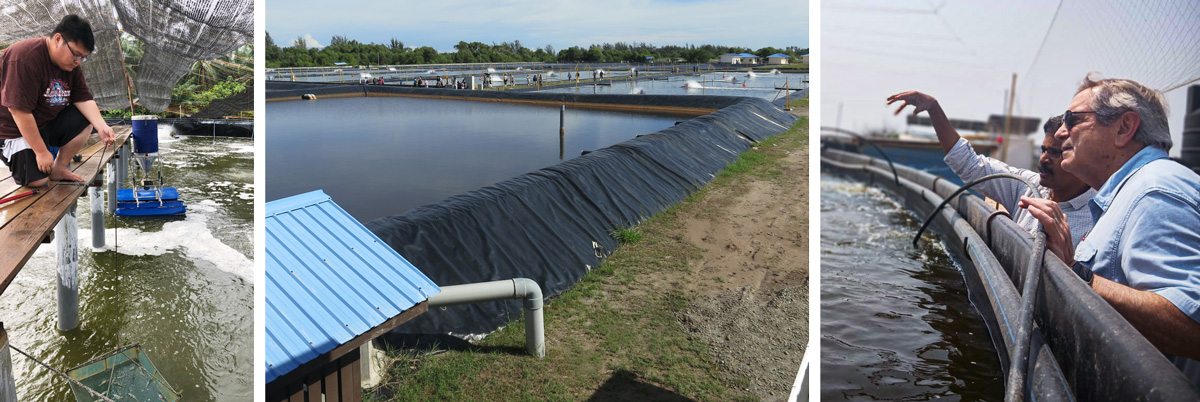
L-R: A worker pulls up a shrimp feeding tray at a smallholder farm in Malaysia; decoupled water treatment with pond effluent entering treatment pond; George Chamberlain and Vasagam Kumaraguru of the Central Institute of Brackishwater Aquaculture (CIBA) in India studying intensive round pond with efficient feed, water, and energy use.
Decoupling biofloc to leverage broader use
Consequently, decoupled, or “ex-situ” biofloc systems are recommended for intensive shrimp ponds. By continuously cropping organic solids from the culture ponds and diverting them to treatment areas, shrimp production efficiency can be improved with lower energy and water use and greater control. This also mitigates the risk of catastrophic crop loss from aeration failure in biofloc ponds.
Cropping of organic solids from culture water can be accomplished by radial flow settlers (RFS), drum filters, and foam fractionators. RFS systems are generally sized to contain 1%–5% of the culture pond volume and are operated with a flow rate that provides 20–30 minutes of residence time (Hargreaves).
Biofloc production can be stimulated in treatment ponds by balancing C:N ratios, using low-energy circulation devices, and aerating to maintain dissolved oxygen (DO). Decoupling of treatment ponds allows biofloc systems to be operated at dissolved oxygen levels below the optimum for aquaculture species, but within acceptable limits for heterotrophic bacteria. The resulting biofloc can be transferred to aquaculture ponds as a feed supplement.
Improving consumption of biofloc
Shrimp are relatively inefficient at consuming suspended biofloc particles. This is partly because only 10-47% of bacteria are aggregated in flocs, and floc size varies widely. To improve the efficiency of biofloc consumption, trials are recommended to evaluate a variety of natural and artificial substrates for attachment of bioflocs as biofilms that are easily consumed by shrimp. Substrates could be continuously colonized with biofloc in treatment ponds, harvested using simple screens, transferred to shrimp production ponds, and then returned with water flow to treatment ponds for reloading.
Energy efficiency
To improve energy efficiency in intensive shrimp ponds, low-lift axial flow pumps are recommended to circulate water as prescribed by CFD models.
Aeration efficiency can be improved through the use of devices such as:
- Smart paddlewheels, which turn on and off when appropriate DO limits are reached.
- High-efficiency airlift pumps.
- High-efficiency pure oxygen systems.
Biomass estimation
To improve shrimp biomass estimation, nursery systems are recommended for stocking of juveniles rather than postlarvae. The larger size of juveniles improves detection of subsequent mortality. Digital counters are available to provide fast, accurate juvenile counting. Thereafter, if self-cleaning drains are equipped with external screens, dead shrimp, molts, and excess feed can be observed daily and deducted from the number stocked.
Advanced feeding systems improve the accuracy of feeding based on shrimp feed consumption. Acoustic feeders use underwater microphones to detect shrimp feeding behavior and dispense feed only when feeding sounds are detected. Self-lifting, camera-equipped feed check trays provide frequent estimates of residual feed levels, which can be used to automatically adjust daily feeding rates.
Other biomass estimation devices such as cameras for clear water systems and sonar for turbid systems are in development.
Digital technology
Intensive ponds require careful control of water quality, feeding, and waste treatment to optimize resources and performance. Management by skilled labor is costly.
Digital technology can assist with management by providing continuous water quality monitoring, biomass estimation, accurate feeding, and smart aeration. It can also calculate required additions of organic carbon for managing C:N and minerals for managing ionic balance.
Details of digital technology will be addressed in a dedicated session of the Shrimp Summit.
Next steps
CFD modeling is needed to generate designs with specifications for area, depth, bottom slopes, center drains, circulation, and aeration for new and retrofitted intensive ponds with decoupled biofloc systems. Designs should be field tested and results made available to the shrimp farming community. It is expected that optimal designs will emerge as industry standards for high performance and efficiency.
LITERATURE CITED
Chamberlain, G.W. 2010. History of shrimp farming. Pages 1-38 in V. Alday-Sanz editors. The Shrimp Book. Nottingham University Press.
Da Silveira, L.G.P., V. T. Rosas, D. Krummenauer, L. H. Poersch, and W. Wasielesky Jr. 2022. Comparison between horizontal and vertical substrate in shrimp super-intensive culture in bioflocs system. Aquacultural Engineering 96. ISSN 0144-8609, https://doi.org/10.1016/j.aquaeng.2021.102218
Fast, A.W. and P. Menasveta. 1998. Some Recent Innovations in Marine Shrimp Pond Recycling Systems. In Advances in Shrimp Biotechnology: Proceedings to the Special Session on Shrimp Biotechnology, 5th Asian Fisheries Forum, Chiengmai, Thailand, 11-14 November 1998. Edited by T.W. Flegel. Multimedia Asia Co. Ltd., Bangkok, Thailand.
MacLeod, M.J., Hasan, M.R., Robb, D.H.F., and M. Mamun‐Ur‐Rashid. 2020. Quantifying greenhouse gas emissions from global aquaculture. Sci Rep 10, 11679. https://www.nature.com/articles/s41598-020-68231-8.pdf
Reese, K., D. Rustad, and C. Reese. 1993. Aquaculture System. US Patent No. 5,178,093, Jan, 12, 1993
Tierney, T.W. and A.J. Ray. 2018. Comparing biofloc, clear-water and hybrid RAS systems as shrimp nurseries. Global Aquaculture Advocate magazine. October 8, 2018
Tookwinas, S., C. Sangrungruang, and O. Matsuda. 1998. Study on the impact of intensive marine shrimp farm effluent on sediment quality in Kung Krabaen Bay, Eastern Thailand. Pages 81-86 In Advances in Shrimp Biotechnology: Proceedings to the Special Session on Shrimp Biotechnology, 5th Asian Fisheries Forum, Chiengmai, Thailand, 11-14 November 1998. Edited by T.W. Flegel. Multimedia Asia Co. Ltd., Bangkok, Thailand.
Vinci, B., G. Chamberlain, R. McIntosh, R. Krohn, S. Kaewchum, A. Santa Marta, and R. Jones. 2026. Optimizing tank design for super-intensive shrimp farming. Aquaculture Magazine, April/May, pages 18-23.
World Bank, 2023. Aquaculture Waste Management in the Republic of Korea and Pakistan: Technical Manual to Promote Advanced Aquaculture Waste Management Technologies in Pakistan (Volume 3). November 2023
APPENDIX
Other proposed applications of biofloc systems
Improving smallholder shrimp farms in India
Smallholder shrimp farms in India typically have little scope for capital investment and little tolerance for risk. Consequently, these farms must be managed with low biofloc concentrations to avoid the risk of catastrophic equipment failure and the expense of backup systems, alarms, etc.
For example, typical smallholder farms in India utilize small ponds stocked at densities of 30-40/m2 to achieve yields of 5-7 mt/ha with paddlewheel aerators positioned to create a circular water current. Biofloc communities can be established by adding continuous circulation of water and solids from the central sump to the top edge of the pond. To minimize energy costs, water should be pumped by low-lift axial-flow pumps. If biofloc becomes too dense (>3 ml/L as measured by settled solids in a 1-liter Imhoff cone), a portion of the water can be replaced with new water. No biofloc cropping equipment is required.
Biofloc recycling of agriculture and food waste
Annually, the cultivation and processing of crops, fruits, and livestock produce billions of tonnes of agricultural waste. A fit-for-purpose application of biofloc technology in developing economies is the conversion of carbonaceous agricultural wastes into fermented, protein-rich byproducts for use in feeds (Sun et al., 2024). The process involves mixing low-value byproducts such as rice stubble, sugarcane bagasse, corn cobs, seaweed, or fruit and vegetable waste with nitrogen-rich aquaculture waste in relatively simple, outdoor fermentation ponds to achieve a C:N ratio of 15:1, thereby stimulating the production of heterotrophic bacteria.
The fermentation process could also be decoupled from aquaculture ponds by adding an inorganic nitrogen source such as ammonium sulfate to balance the C:N ratio. Unlike microbial biomass from sewage or industrial waste systems, aquaculture and agriculture wastes can be safely recovered for feed and food applications.
This is an untapped opportunity to valorize low-value carbonaceous byproducts by harnessing bacteria to increase protein levels. The resulting high-moisture biofloc could be blended with soybean meal to convert indigestible soy sugars into nutritious bacterial protein, then dried and pelletized for animal feeds.
Biofloc consumption by filter feeders
Biological cropping of biofloc solids can be accomplished by stocking filter-feeding species such as tilapia, milkfish, oysters, mussels, or clams in treatment ponds. The objective is to produce secondary crops using excess bioflocs. More advanced treatment systems can utilize seaweed, such as Ulva, and halophytes, such as Salicornia, to strip dissolved nutrients using IMTA technology. Excess biofloc can be digested in denitrification systems or flocculated and captured in geotextile bags.