
UNIMA farms shrimp in Mahajamba Bay, Madagascar’s largest natural habitat of endemic monodon shrimp. Its operations are a model of sustainability: Ponds stand on mangrove-free intertidal clay salt flats, with minimal impact on mangrove. Production is limited to 3,200 tons per year from an area of 4,000 ha. Stocking density stays low at 15-25 shrimp per square meter, with very high survival rates. Feed is 100% traceable, non-GMO, antibiotic-free and without terrestrial animal protein additives. Water treatment systems are chemical-free with minimal effluent discharge. The farm uses no chemicals other than agricultural lime.
But UNIMA goes beyond just sustainability. For more than 35 years, UNIMA’s mission has focused on regeneration—restoring and improving ecosystems while strengthening communities. Before regenerative ideals became trendy, UNIMA was demonstrating how aquaculture can be reimagined to both rebuild coastal environments and lift rural families. It opened its first healthcare dispensary in 1995 and its first school in 1996; it began mangrove replanting in 1998 and carried out its first carbon footprint audit in 2008. As the benefits of regenerative systems that gain social license by integrating the local community attain broader recognition and support, UNIMA’s history of pioneering efforts testifies to its vision and leadership in the field.
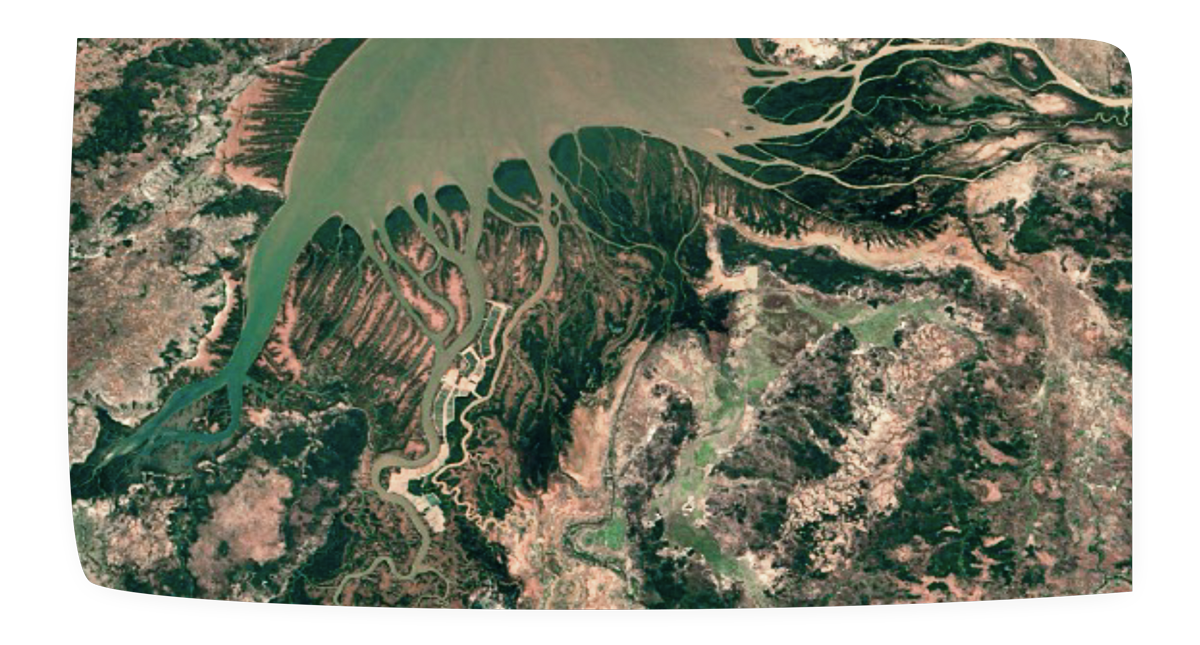
Total mangrove area is approx. 500 sq. km; to minimize impact, farm is approx. 20 sq. km or 4% of total area.
Since 2010, CO₂ equivalent emissions on UNIMA’s farms have decreased by 35%, with a further 65% reduction targeted for 2027. The protection of 51,300 hectares of mangroves avoids 20,157 tons of CO₂ emissions annually. More than 3.5 million trees have been planted, including 1.5 million mangroves that capture 22,000 tons of CO₂ each year. Its Verama project aims to restore 600 hectares of arid soils with 1.7 million trees; the Mangarahara Varuna project involves rewilding 4,500 hectares of semi-primary forest.
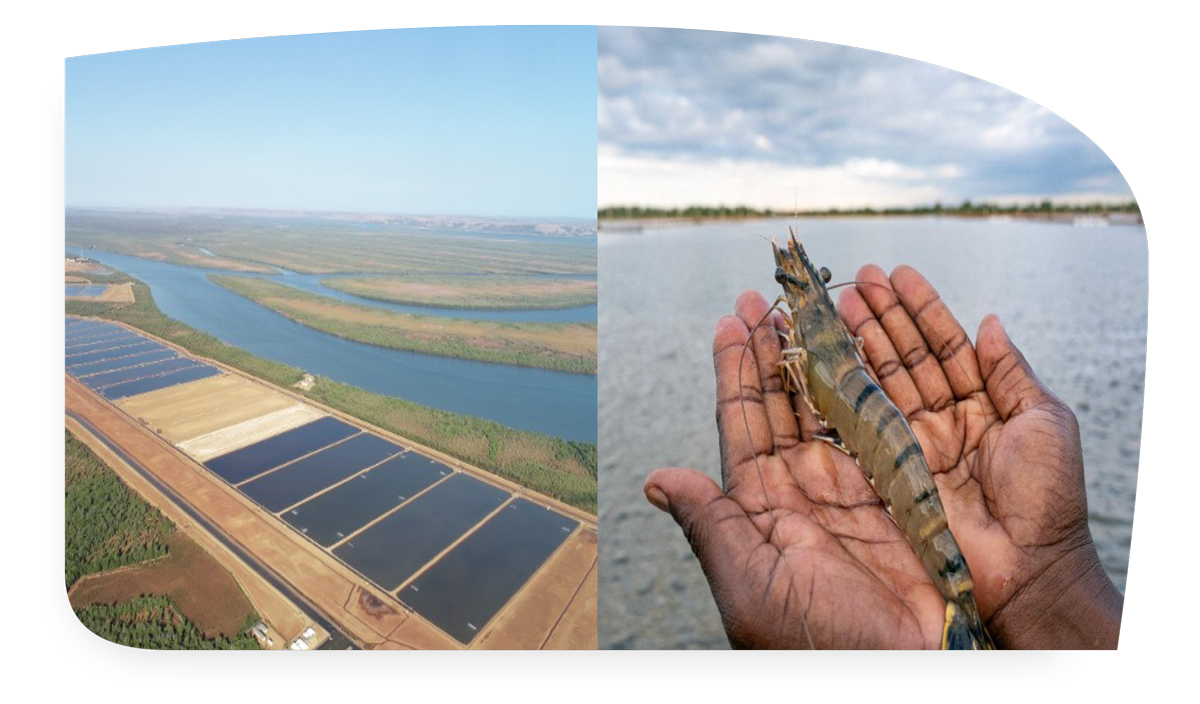
UNIMA’s respect for the ecosystem and its sustainable practices have enabled it to produce shrimp that is famous for is quality.
While UNIMA’s efforts to create a net-positive impact on the natural environment are exemplary, its initiatives that extend to the community are what really set the company apart. UNIMA supports 10 schools serving 2,500 pupils annually and 10 dispensaries with a “Mother and Child” unit providing more than 30,000 consultations per year. Unima’s entire enterprise—from its farms to its community programs—supports(?) more than 13,000 people. The average gross salary of its employees is more than 3.5 times the minimum wage. UNIMA was also a partner in Madagascar’s first collective labour agreement in the sector, which ensures safe and fair conditions.
Regenerative aquaculture is a farming approach that does not stop at reducing negative impacts. It aims to restore and improve ecosystems while generating benefits for local communities. It’s a radical departure from conventional farming in that it prioritizes returning more than it takes. Success is not measured by crop yield alone, but also by the degree to which habitats rebound, biodiversity returns, and local prosperity grows. It’s a commitment that guides UNIMA’s corporate mission.
UNIMA’s enlightened approach to shrimp farming and community investment is all the more powerful when the quality of its shrimp is considered. In UNIMA’s own words:
“We believe taste starts long before the plate. It starts with ecosystems that breathe, water that stays balanced, shrimp that is grown with high net survival rates at low stocking densities, and feeds that are non-GMO, antibiotic-free, and fully traceable … After more than 35 years of innovation, UNIMA has proven that regenerative seafood can nourish the world and renew the Earth—while producing exceptional shrimp.”